
A safe trip starts with a measured vehicle and a loading plan that matches the actual chair, battery, accessories, helper capacity, and whether the user stays seated during transport.
This is a planning guide, not a vehicle-fit guarantee. Follow the chair, ramp, lift, restraint, and vehicle instructions for the exact equipment in use. Federal and professional sources are listed at the end.
Section 1
Measure Before Loading
Measure the physical path the chair will travel. Manufacturer cargo-volume numbers rarely show the narrowest opening, trim intrusion, hinge movement, or the clearance needed to close a trunk or hatch.
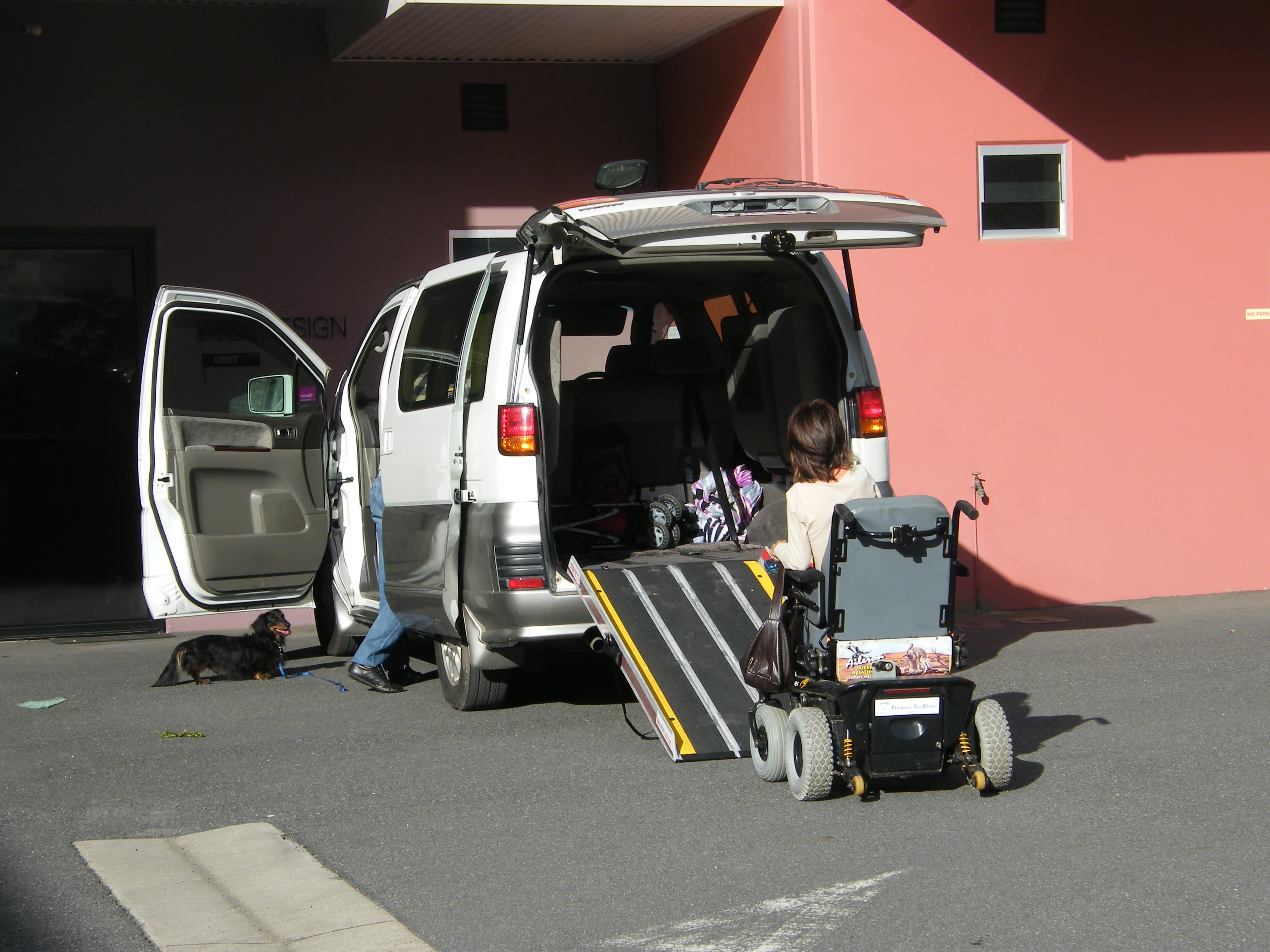
Cargo opening width
Measure the narrowest point
Measure between trim, hinges, weather seals, and any lift hardware. The opening must clear the folded chair at its widest point.
Cargo depth with seats folded
Measure the usable floor
Measure from the loading edge to the seatback or barrier. Include the space needed to close the hatch or trunk without contact.
Chair-only weight
Weigh without the battery
Record the heaviest piece a helper must handle. Add the battery, cushion, ramp, and accessories separately for the total transport load.
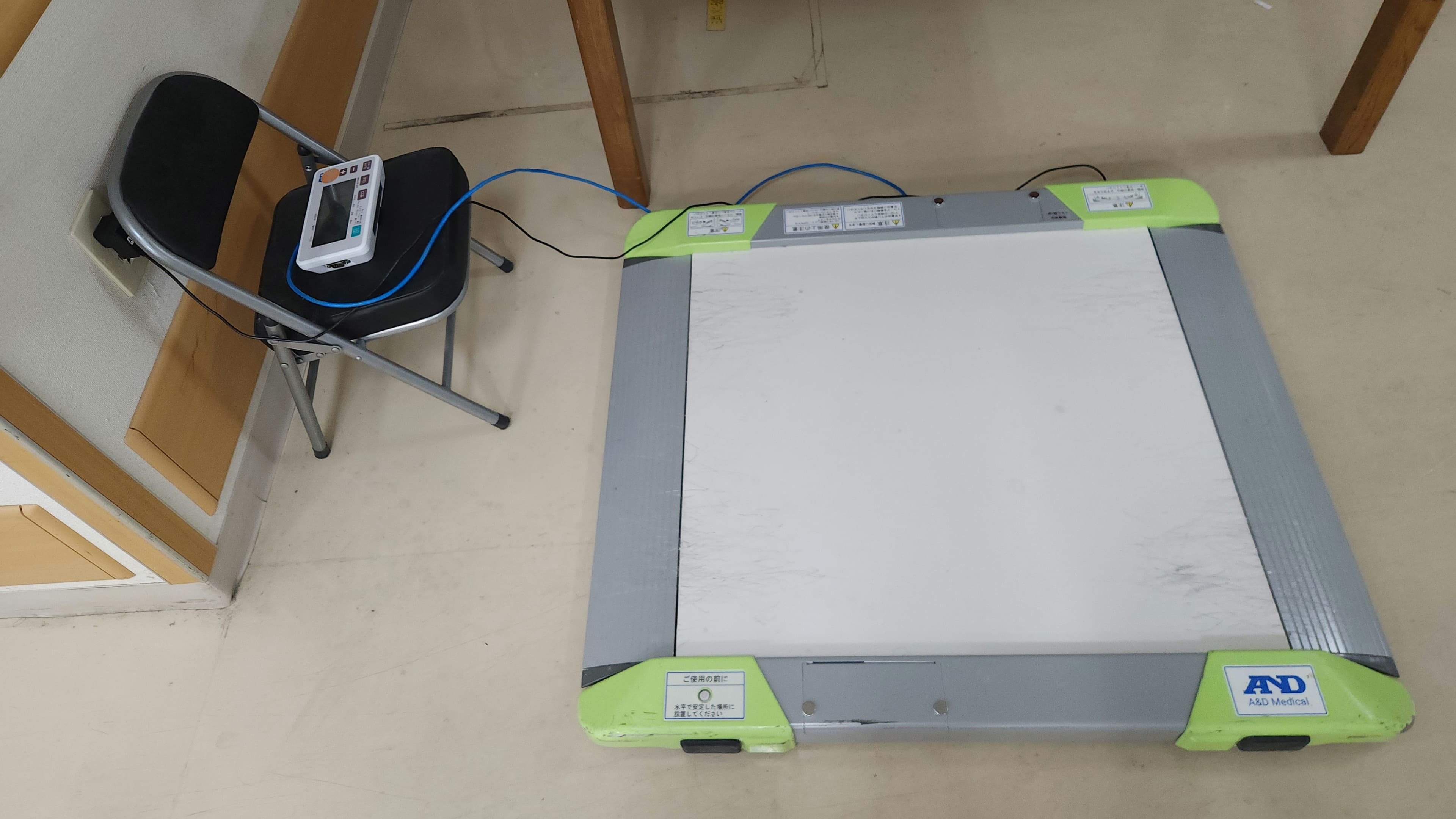
A useful measurement note
For an occupied lift or ramp, total load means the user, wheelchair, battery, cushion, bags, and any other carried equipment. The chair-only number is for the piece a helper actually lifts.
Section 2
Choose a Vehicle Method
Choose the method that matches the chair's folded dimensions, the total load, the user's transfer plan, and the available assistance. A larger vehicle is not automatically compatible.
Sedan
Compact, folded wheelchairs with a light lift weight.
Check: Measure the trunk opening and trunk depth, not only the advertised cargo volume.
SUV / Crossover
Folded wheelchairs that need a wider opening or more vertical clearance.
Check: Check the lift-over height and keep the folded chair secured during travel.
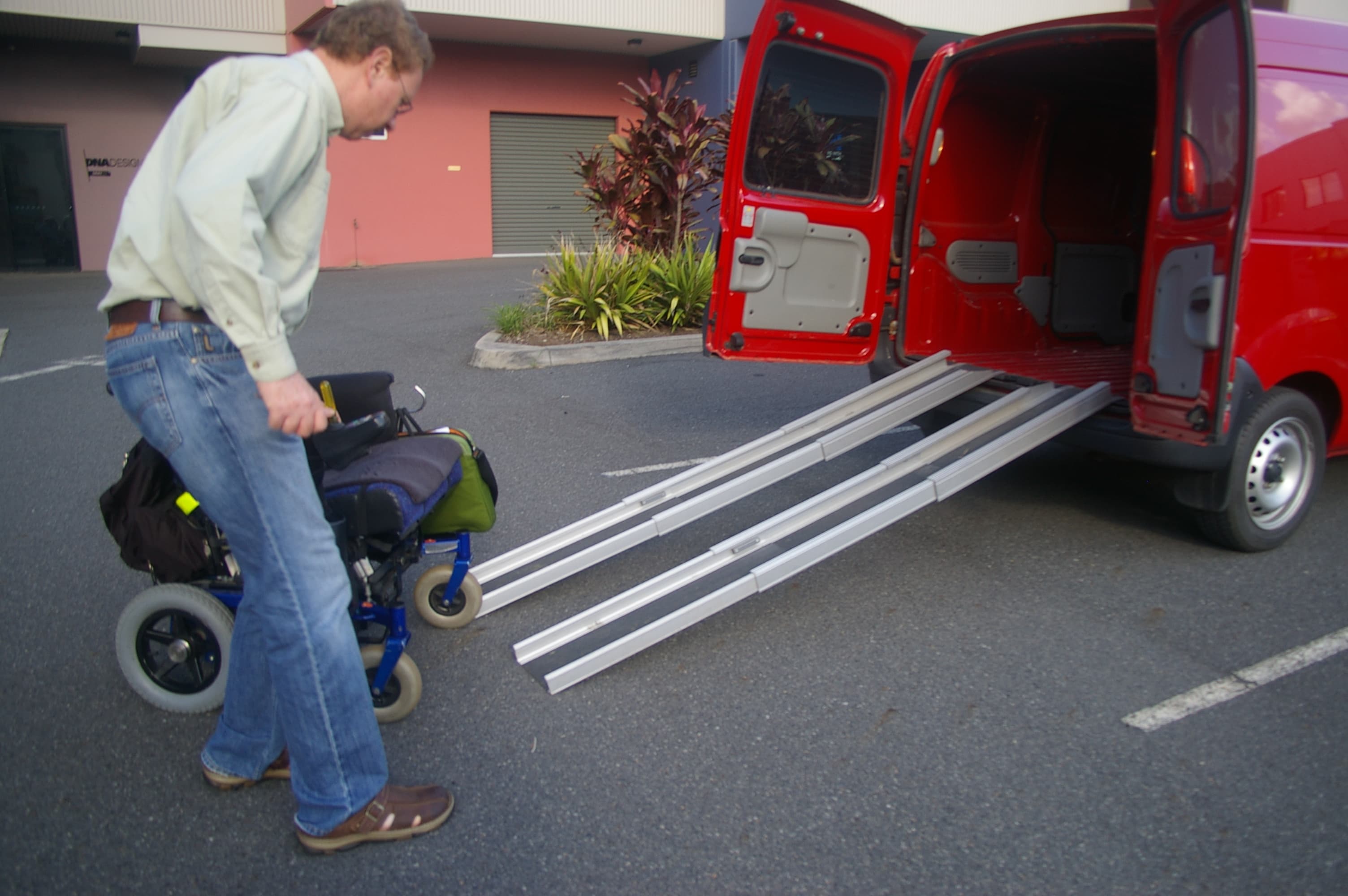
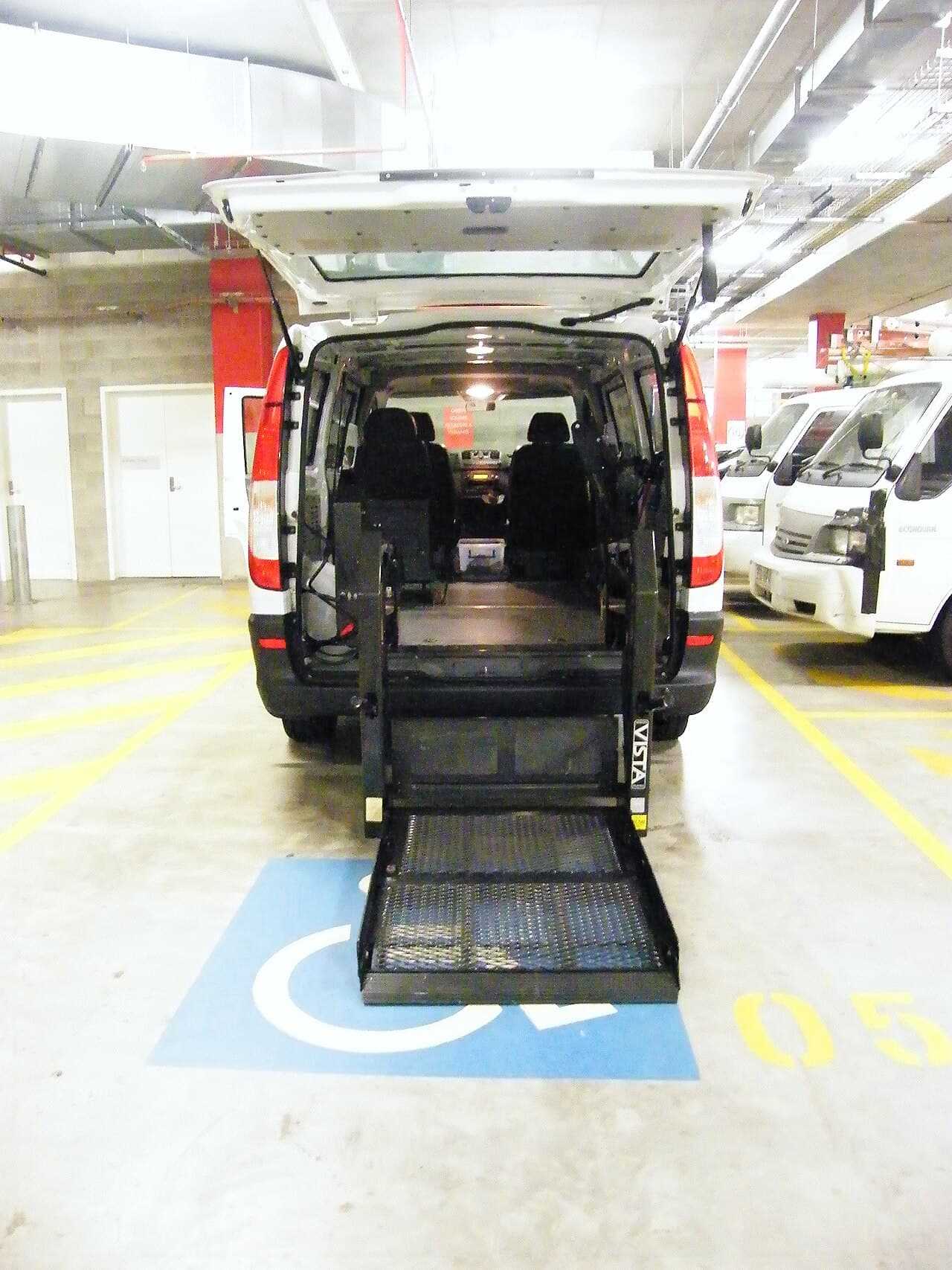
Accessible van
Occupied transport, ramps, lifts, and heavier or wider wheelchairs.
Check: Confirm ramp, lift, tie-down, and occupant-restraint compatibility with the vehicle provider.
Section 3
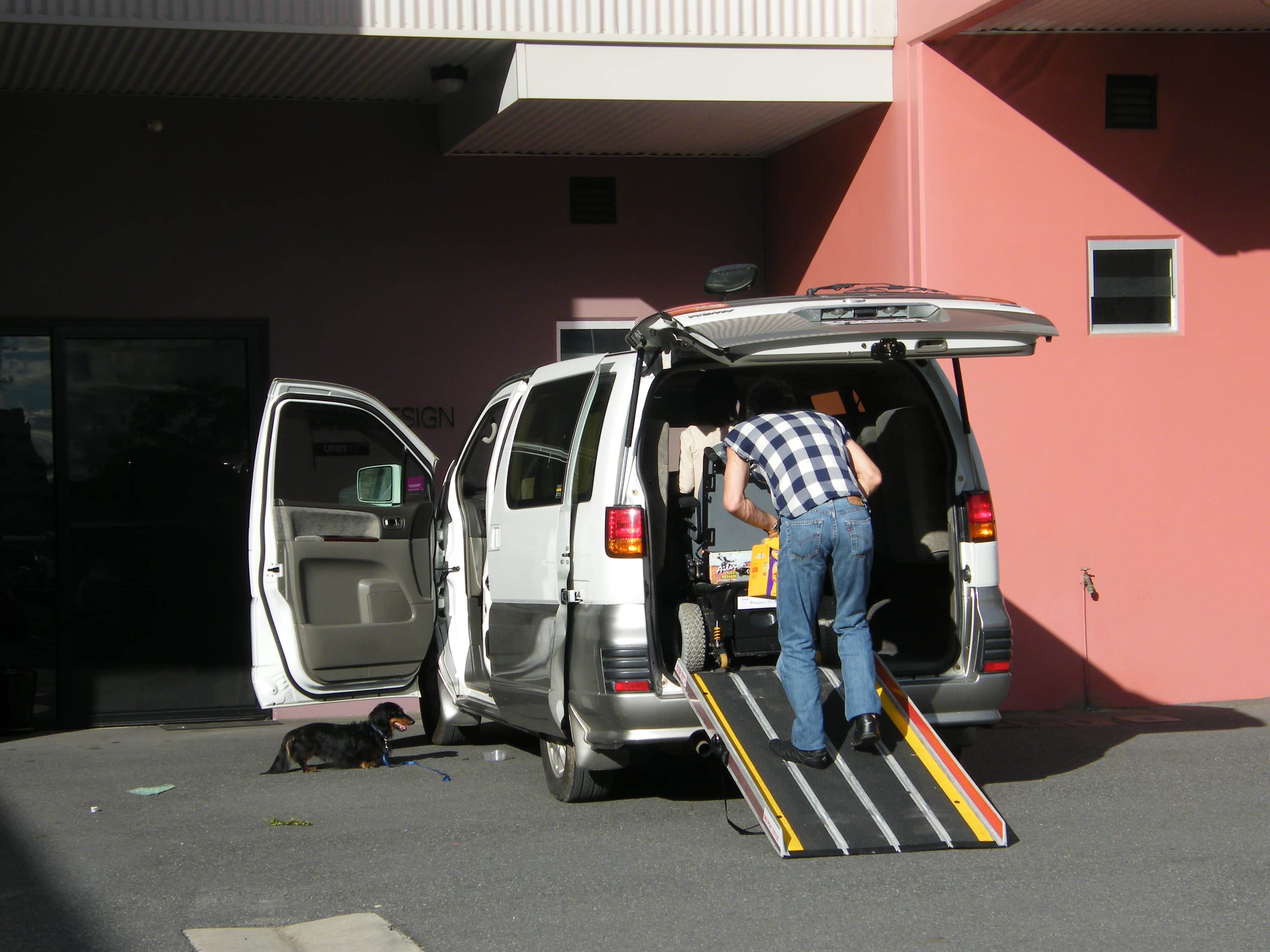
Photo Loading Sequence
- 1
Measure
Confirm the vehicle opening, floor depth, lift-over height, and the chair's folded envelope before the trip.
- 2
Prepare
Remove the battery only when the chair and vehicle instructions call for it. Clear loose items and set the ramp or lift on level ground.
- 3
Load
Use the vehicle's designed ramp, lift, or loading aid. Keep hands clear of pinch points and never improvise a ramp angle.
- 4
Secure
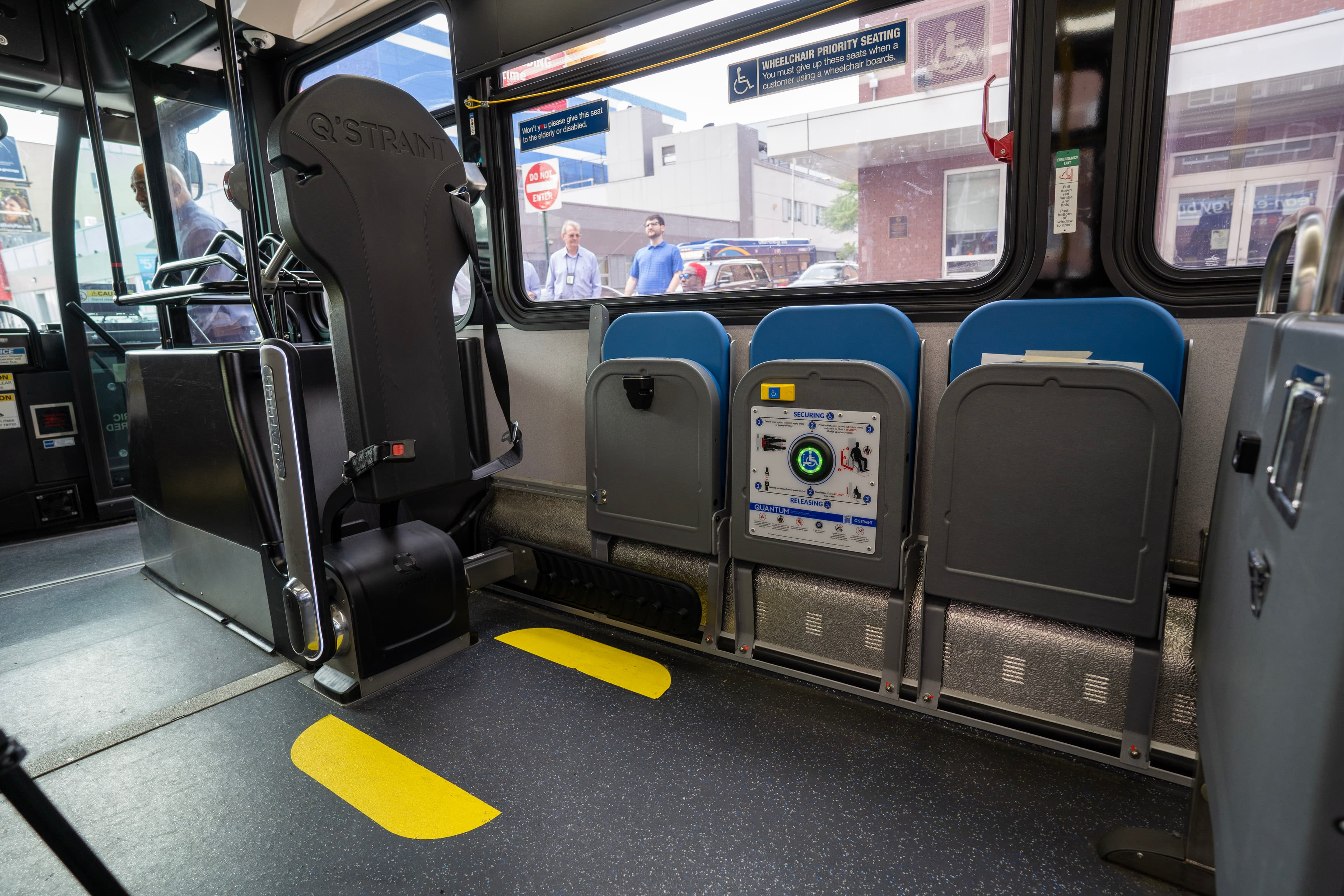
Lock the chair or engage its parking brake. Use the restraint system specified for the chair and vehicle, then check every connection.
Never ask one person to catch, twist, or carry a moving chair beyond their safe capacity. Stop and reset the equipment when the path, posture, or weather makes the loading motion unstable.
Section 4
Heavy Wheelchair Path
Heavy Wheelchair safety boundary
Calculate the total load before choosing a ramp or lift. The equipment rating must exceed the loaded total, and the vehicle structure and anchor points must be approved for that use.
- Use a rated lift or ramp with margin above the combined chair, user, battery, and accessory load.
- Use two-person help or powered equipment when one person's safe handling capacity is not enough.
- When the user remains seated, use an approved occupant restraint system designed for occupied wheelchair transport.
- Ordinary cargo straps do not replace occupant restraints and should not be presented as a passenger safety system.
Section 5
GoldSeason Transport Fit
These rows repeat the official GoldSeason product data already used by the fit finder. They help you compare pieces to a measured vehicle; they do not certify a vehicle match, ramp rating, or occupant restraint.
| Model | Chair-only | Folded L × W × H | Seat width | Battery | Source status |
|---|---|---|---|---|---|
| Travel Air W 03 | 33.1 lb | 13.4 × 21.3 × 33.1 in | 17.3 in | Removable | Manufacturer specFDA listing not verified |
| Travel Air W 21 | 35.7 lb | 15.4 × 21.7 × 31.2 in | 18.1 in | Removable | Manufacturer specFDA listing not verified |
| Travel Air W 26 | 37.0 lb | 21.7 × 13.8 × 33.5 in | 16.1 in | Removable | Manufacturer specFDA listing not verified |
| Power Max 01 | 54.0 lb | 17.7 × 25.6 × 30.3 in | 18.9 in | Removable | Manufacturer specFDA listing not verified |
| Power Max 16 | 65.5 lb | 22.0 × 25.6 × 39.0 in | 19.7 in | Removable | Manufacturer specFDA listing not verified |
| Spacious Pro 15 | 48.5 lb | 28.7 × 14.2 × 29.5 in | 21.7 in | Removable | Manufacturer specFDA listing not verified |
| Basic 13 | 63.9 lb | 31.1 × 16.1 × 28.1 in | 18.9 in | Not removable | Manufacturer specFDA listing not verified |
Section 6
Vehicle Fit Worksheet
Record the numbers you will review with the vehicle, equipment, and rehabilitation professionals. This worksheet is for planning only and does not issue an automated safety verdict.
Section 7
Final Drive Checklist
Vehicle and equipment
Loading and securing
Before driving
Section 8
When to Get Professional Help
Vehicle mobility specialist
Ask a qualified mobility dealer to verify the lift, ramp, anchor, door, and floor structure for the exact vehicle and chair.
Occupational or physical therapist
Get an individual assessment when transfers, fatigue, posture, pressure care, or occupied transport are part of the trip.
Manufacturer or carrier
Request written equipment limits and installation instructions when a battery, lift, tie-down, or restraint is not clearly identified.
Two-person loading plan
Stop and redesign the process when the chair or load exceeds a helper's safe capacity, or when weather and traffic remove a stable setup.
Scope: This guide supports planning and professional conversations. It does not replace professional evaluation, equipment instructions, or applicable vehicle and accessibility requirements.
Section 9
Sources and Verification
The source layers have different jobs. FDA resources are used for device-information verification; they are not used to certify vehicle fit, ramp capacity, tie-down installation, or occupant restraint performance.
Device database reference; listing status for these models is not verified here.
Verification note: Product measurements are labeled Manufacturer spec. FDA listing not verified is shown for every row until a specific model, manufacturer, and FDA record can be matched one-to-one.
Review date: August 2026. Confirm current instructions and local requirements before each installation or trip.
Photography: The photographs are illustrative third-party images, not GoldSeason product photos. Attribution and license details:
Remember: A measured route, rated equipment, approved securement, and a realistic helper plan are all required parts of safe wheelchair transportation.