
Target Users: Seniors and people with disabilities who use powered wheelchairs
Core Value: Enable wheelchair users to get in and out of bed safely, manage nighttime routines independently, and move through their bedroom with confidence.
1. Pre-Renovation Assessment
1.1 Transfer Capability Assessment
The heart of bedroom accessibility is the safe transfer between bed and wheelchair. Before choosing a plan, assess the user's transfer ability.
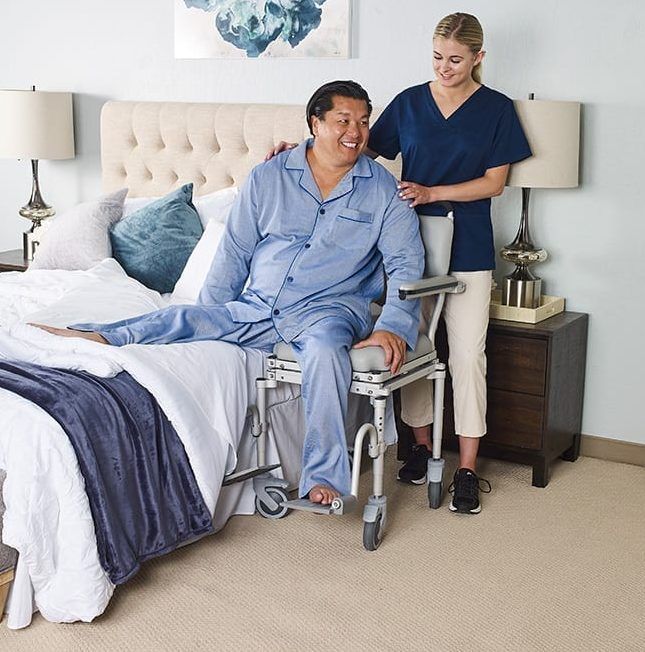
| Assessment Area | Standard Question | Your Situation |
|---|---|---|
| Upper Body Strength | Can you lift your body weight using your arms to push up? | Fully able Partially Not able |
| Trunk Control | Can you maintain sitting balance independently? | Fully able Needs support Not able |
| Transfer Aids Needed | Do you need equipment or assistance to transfer? | None Equipment needed Caregiver needed |
| Nighttime Routines | Can you get up independently at night to use the bathroom? | Fully able Some assistance Full assistance needed |
1.2 Bedroom Measurements
Bedroom floor area
________ sq ft
Bed size
Single (38 inches) / Queen (60 inches) / King (76 inches)
Bed surface height (floor to top of mattress)
________ inches
Wheelchair seat height
________ inches
Clear width on each side of bed
Left ________in / Right ________in
Clear space at foot of bed
________ inches
Doorway width
________ inches
2. Core Modification Points
2.1 Bed Height -- The Most Critical Factor
Bed height directly determines transfer safety, how much effort is needed to get out of bed, and how easily you can get dressed from a seated position.
[tip] The Golden Rule
Ideal bed height = wheelchair seat height 0-1 inch.
For most powered wheelchair users, the target is 17-19 inches from floor to top of mattress.
| User Situation | Recommended Adjustment | Why |
|---|---|---|
| Weak lower body strength | Set bed 1-2 incheshigher than wheelchair | Makes it easier to slide/scoot into the wheelchair |
| Weak upper body strength | Set bed height equal to wheelchair | Minimizes the push-up force needed to stand |
| Falls risk / confusion | Keep bed at 15-16 inchesor lower | Reduces injury risk if user rolls out of bed |
Three Ways to Adjust Bed Height
Option A -- Replace the Bed Frame or Mattress
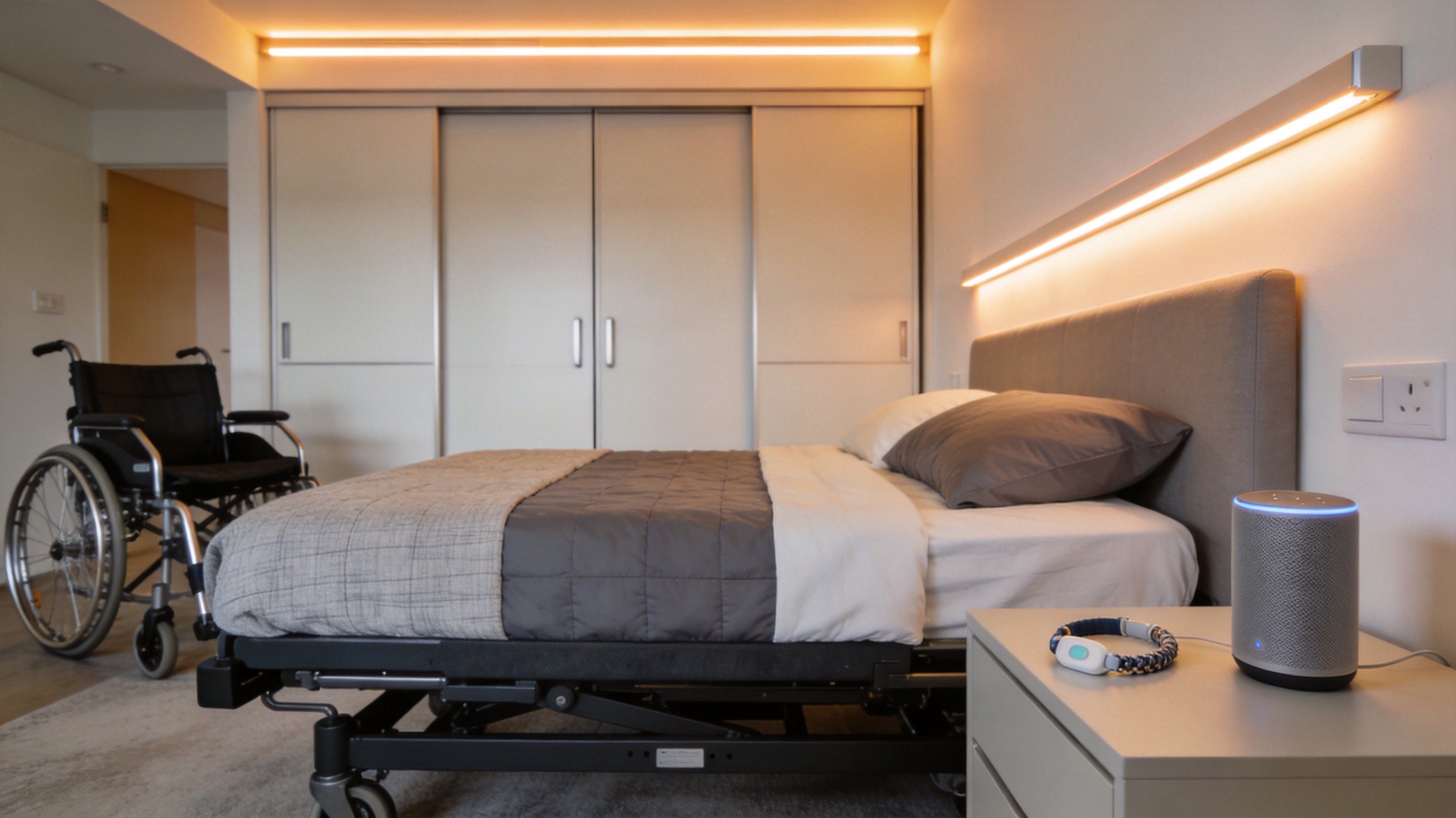
Choose an adjustable-height bed frame. Electric adjustable beds (Lucid L300, Tempur-Pedic Ease): $400-800. Hospital-style bed (Drive Medical): $800-1,500.
Option B -- Raise or Lower an Existing Bed
To lower: remove storage drawers, use a thinner mattress (6-8 inches). To raise: install bed risers (Home-it Bed Risers, $15-30 on Amazon) under the bed frame legs.
Option C -- Professional Care Bed
Full electric height adjustment, removable side rails, lockable casters. Best for users with significant care needs or pressure sore risk.
2.2 Bedside Clearance Space
Every bed needs adequate clearance around it for the wheelchair to approach, transfer, and leave safely.
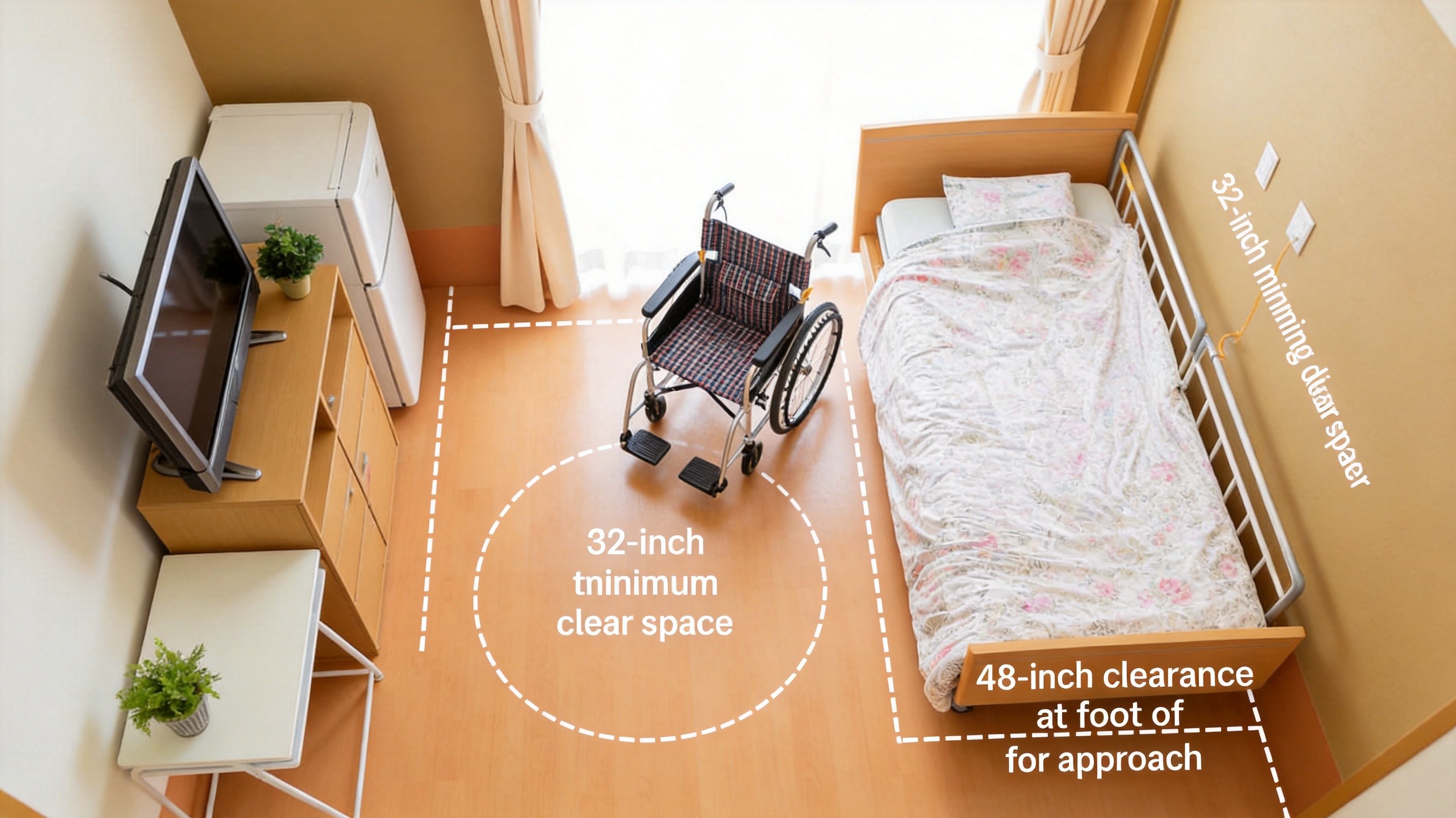
| Space Type | Minimum | Comfortable |
|---|---|---|
| Bedside clearance (one side) | 32 inches (80cm) | 40-48 inches (100-120cm) |
| Foot of bed clearance | 48 inches (120cm) | 60 inches (150cm) |
| Turn diameter | 60 inches (150cm) | 72 inches (180cm) |
| Doorway | 32 inches (80cm) | 36+ inches (90cm+) |
[!] If bedside clearance is less than 32 inches, transfers become unsafe -- the wheelchair cannot position close enough for a stable transfer.
2.3 Getting In and Out of Bed -- Transfer Aids
Bed Rails
A bed rail prevents rolling out of bed at night, provides a handhold to push up from lying, and helps reposition during sleep.
| Type | Pros | Cons | Price |
|---|---|---|---|
| Fold-Down Rail | Folds down when not needed | Weaker support | $40-100 |
| Fixed Rail | Very stable, strong support | Takes up space | $60-150 |
| Smart Sensing Rail | Auto-raises/lowers, can link to alerts | Expensive, needs power | $200-500 |
Transfer Boards
A transfer board bridges the gap between bed and wheelchair, allowing a scooting transfer rather than a lifting transfer. This dramatically reduces the strength required.
How to use: Angle wheelchair ~30 beside bed (brakes locked). Place board one end on bed, one end on wheelchair seat. Push body weight along the board. Works best when height difference is 1 inch or less.
Recommended: Sammons Preston Transfer Board ($30-80) SmarketSale Wooden ($20-50)
2.4 Closet and Storage
Most closets are built for standing-height access. Hanging rods above 55" are unreachable from a seated position.
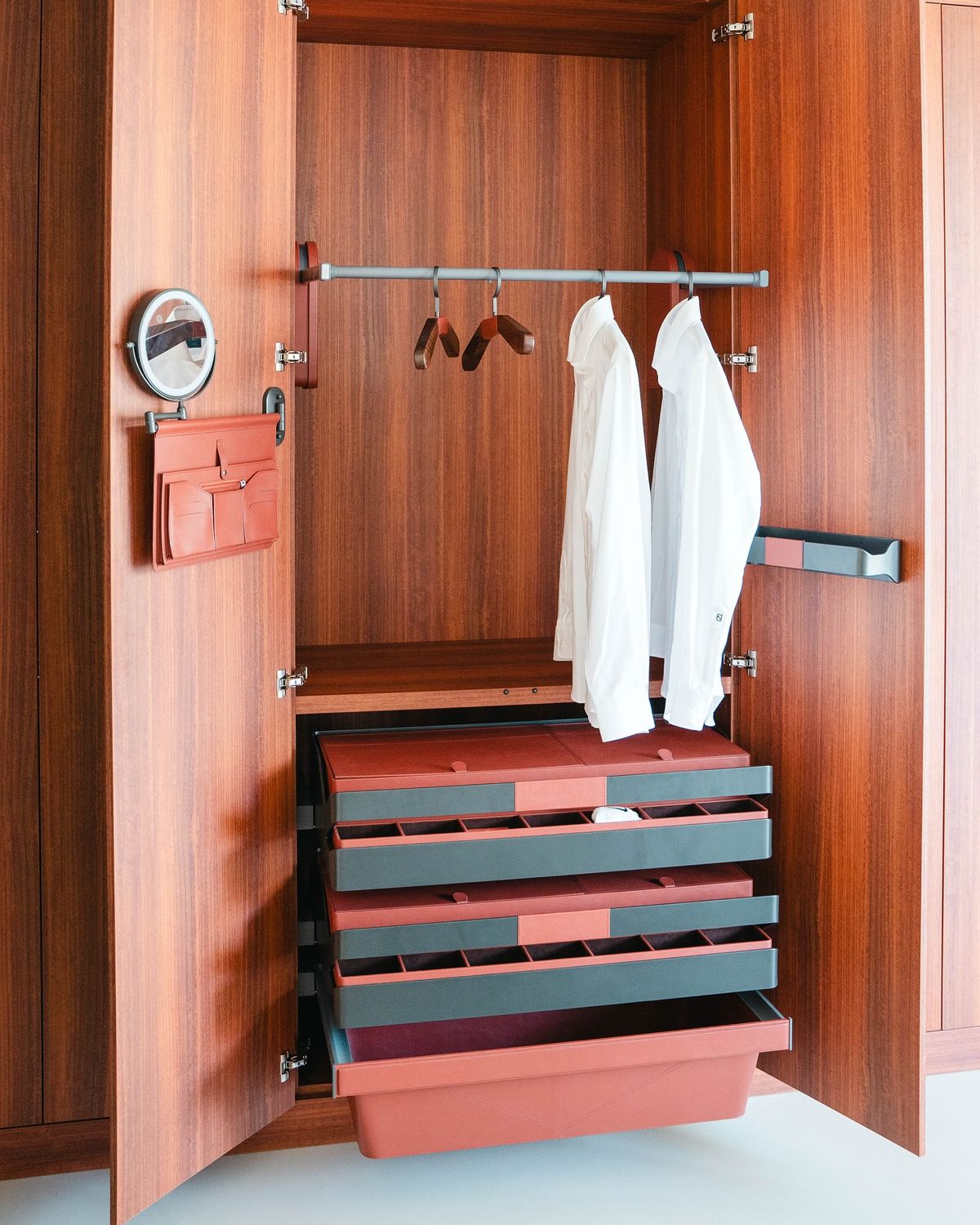
Four Ways to Make a Closet Accessible
Option A -- Install Sliding Doors
Replace standard swing doors with IKEA PAX bypass sliding doors -- eliminates the 32+ inch door swing space needed.
Option B -- Lower the Hanging Rods
The single highest-impact, lowest-cost change. Reinstall upper rod at 52 inchesand lower rod at 38-44 inches from the floor -- primary zone for wheelchair access.
Option C -- Drawer-Based Storage
Convert the bottom half of hanging storage to full-extension drawers (IKEA KOMPLEMENT). Everything is visible and reachable from a seated position.
Option D -- Open Wardrobe System
Remove cabinet doors entirely. Open hanging rods at 40-48 inches from floor, clear storage bins. Best for renters on a budget.
2.6 Lighting Systems
Standard wall switch height (48-52") is above the seated reach range for most wheelchair users. Night lighting is essential for nighttime safety.
Lower the Switch
$0-50
An electrician relocates the switch to 36-40 inchesfrom the floor.
Add a Remote Switch
$20-60
Keep original switch. Add a battery-powered remote (Kasa, RunLessWire) that sits on the nightstand.
Smart Lighting System
$100-400
Replace with Kasa Smart Switch + smart bulbs. Control by voice, phone app, or bedside remote.
Must-Light Areas at Night
2.7 Emergency Response Systems
Most nighttime medical emergencies happen in the bedroom. If alone, a working emergency response system is critical.
Option A -- Pull-Cord or Wall Button
Mount beside bed headboard (reachable while lying down) and in the bathroom. Services: Life Alert ($30-50/mo), Medical Guardian ($25-45/mo), Bay Alarm Medical ($20-30/mo).
Option B -- Smart Watch / Medical Alert Wearable
Apple Watch has automatic fall detection + SOS. For dedicated medical alert: MobileHelp Smart Watch or Medical Guardian Freedom Watch.
Option C -- Smart Speaker Voice Commands
Place on nightstand. Say: Hey Siri call 911 or Alexa call emergency services. Requires internet and clear speech.
3. Renovation Plan Overview
| Easy | Medium | Major | |
|---|---|---|---|
| Budget | $45-300 | $300-1,200 | $1,200-1,800+ |
| Time | 1-3 hours | 1-2 days | 3-7 days |
| Best For | Renters, minor needs | Long-term homeowners | Full-time care needs |
| Independence |
Easy Plan
- [ok] Bed risers ($15-30)
- [ok] Single-side bed rail ($40-100)
- [ok] Transfer board ($25-80)
- [ok] Motion-sensor night lights 3 ($20-50)
- [ok] C-shaped side table ($40-100)
Medium Plan
- [ok] Adjustable bed frame ($200-600)
- [ok] Closet sliding doors ($200-500)
- [ok] Smart lighting system ($100-300)
- [ok] Full-extension drawers ($100-300)
- [ok] Medical alert system ($20-50/mo)
Major Plan
- [ok] Electric hospital bed ($800-1,500)
- [ok] Custom sliding-door closet ($500-1,000)
- [ok] Full smart home integration ($300-600)
- [ok] Non-slip flooring ($500-1,500)
- [ok] Ceiling-mounted patient lift ($1,500-3,000)
5. Safety Considerations
5.1 Transfer Safety
5.2 Bed Rail Safety
5.3 Nighttime Safety
6. Real Stories
Barbara's Bedroom
Austin, Texas 72 years old Post-stroke, powered wheelchair user for 18 months
Budget: $130
"I used to have to wait for my daughter to come over just to get into bed at night. Now I do it myself, and I don't wake her up anymore. The motion light in the hallway turned out to be the most important thing we did."
Robert's Full Renovation
Phoenix, Arizona 68 years old Multiple sclerosis, powered wheelchair user for 4 years
Budget: $720
"The adjustable bed frame was worth every penny -- the ability to fine-tune the height with a remote means I can always maintain the perfect transfer height."
7. Final Checklist
Bed Height and Transfers
Lighting
Storage and Closet
Safety
8. Resources
Further Reading
- Universal Design for the Home by Wendy A. Jordan
- Accessible America by Bess Williamson
- AARP HomeFit Guide
- Family Caregiver Alliance
[tip] Before starting any renovation, consult with an occupational therapist or physical therapist -- they can assess your specific transfer needs and recommend the right equipment and bed height. A few hundred dollars on professional guidance often saves thousands buying wrong equipment.
Document Version: v1.0 Last Updated: April 2026 Review Status: Awaiting expert review